Skip to Main Content
  • Instructor Site
  • Student Store
  • Canada StoreCanada
Student store Macmillan learning linkStudent Store Student store Macmillan learning linkStudent Store
    • I'M AN INSTRUCTOR

    • I'M A STUDENT
  • Student store Help link
  • search

    Find what you need to succeed.

    search icon
  • Shopping Cart
    0
    • Canada StoreCanada
  • Who We Are

    Who We Are

    back
    • Who We Are
  • Student Benefits

    Student Benefits

    back
    • Special Offers
    • Flexible Formats
    • College Quest Blog
  • Discipline

    Discipline

    back
    • Anatomy & Physiology Astronomy Biochemistry Biology Chemistry College Success Communication Economics Electrical Engineering English Environmental Science Geography Geology History Mathematics Music & Theater Nutrition and Health Philosophy & Religion Physics Psychology Sociology Statistics
  • Digital Products

    Digital Products

    back
    • Achieve
    • E-books
    • iClicker Student App (Student Response System)
  • Support

    Support

    back
    • Get Help
    • Rental and Returns
    • Support Community
    • Student Options Explained

Cover: The Developing Person Through Childhood and Adolescence, 14th Edition by Kathleen Stassen Berger; Kendra Thomas
Rental FAQs

GET FREE SHIPPING!

Use Promo Code SHIPFREE at Step 4 of checkout.

*Free Shipping only applicable to US orders. Restrictions apply.

The Developing Person Through Childhood and Adolescence

Fourteenth  Edition|©2027  Kathleen Stassen Berger; Kendra Thomas

  • About
  • Contents
  • Authors

About

Learn to Think Like a Developmentalist

The Developing Person Through Childhood and Adolescence helps you move beyond simple explanations to better understand how people grow and change throughout their lives. Five core principles of developmental science introduced in Chapter 1 are reinforced throughout the text, helping you think critically, make connections across topics, and apply what you learn in other courses and future careers.

Whether you are studying social work, early childhood education, nursing, or another field, the text makes developmental science engaging and accessible through personal stories, case studies, and research-based insights. An approachable narrative style combines humor, curiosity, and real-world examples to help you better understand topics like attachment, language development, adolescence, and parenting.

Digital Options

Contents

Table of Contents

PART 1 The Beginnings

Chapter 1 The Science of Human Development

Chapter 2 Theories

Chapter 3 The New Genetics

Chapter 4 Prenatal Development and Birth

PART 2 The First Two Years

Chapter 5 Biosocial Development

Chapter 6 Cognitive Development

Chapter 7 Psychosocial Development

PART 3 Early Childhood

Chapter 8 Biosocial Development

Chapter 9 Cognitive Development

Chapter 10 Psychosocial Development

PART 4 Middle Childhood

Chapter 11 Biosocial Development

Chapter 12 Cognitive Development

Chapter 13 Psychosocial Development

PART 5 Adolescence

Chapter 14 Biosocial Development

Chapter 15 Cognitive Development

Chapter 16 Psychosocial Development

Epilogue: Ongoing Development

Authors

Kathleen Berger

Kathleen Stassen Berger transferred from Stanford University to Radcliffe, earning a B.A. and M.A.T. from Harvard University, and then an M.S. and Ph.D. from Yeshiva University, all while teaching adolescents. Her broad experience as a learner and educator includes directing a preschool, chairing philosophy at the United Nations International School, and teaching human development to graduate students at Fordham University, undergraduates at Montclair State University, aspiring professionals at Quinnipiac University in Connecticut, and incarcerated individuals at Sing Sing Prison. For most of her professional career, Berger has been a professor at Bronx Community College of the City University of New York.

Berger is also the author of  Invitation to the Life Span, The Developing Person Through Childhood and Adolescence, and  A Topical Approach to the Developing Person Through the Life Span, as well as Grandmothering: Building Strong Ties with Every Generation. Berger’s research interests include adolescent identity, immigration, bullying, and grandparents, and she has published articles in the Wiley Encyclopedia of Psychology, Developmental Review , and Human Development, and in publications of the American Association for Higher Education and the National Education Association for Higher Education. She continues teaching and learning, not only from students and friends but also from four daughters and three grandsons.
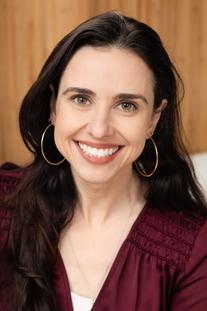

Kendra Thomas

Kendra Thomas is an associate professor of psychology at Hope College, earning a Ph.D. from Ball State University. She has taught both undergraduate- and graduate-level human development to future nurses, teachers, and mental health professionals for 10 years. Originally from Londrina, Brazil, Thomas has long-standing research collaborations with the University of São Paulo and the Federal University of Paraná as well as a South African community development organization. Through a research-practice partnership, she and colleagues have expanded the research of hope, especially in contexts of adverse family circumstances and home-visitation interventions. She is passionate about using research as a tool for building sustainable community development initiatives.

Thomas is an active researcher who has published in journals including Journal of Adolescence, Human Development, Applied Developmental Science, Journal of Youth and Adolescence, and International Journal of Behavior Development. She has also written about human development for TIME, Newsweek, Templeton Ideas, and Scientific American magazine.

She lives in Michigan with her husband, two children, and their old dog. Her hobbies include picking up random socks around the house and reading picture books at night.


Story, science, scaffolding: Teaching students to think like developmentalists.

Learn to Think Like a Developmentalist

The Developing Person Through Childhood and Adolescence helps you move beyond simple explanations to better understand how people grow and change throughout their lives. Five core principles of developmental science introduced in Chapter 1 are reinforced throughout the text, helping you think critically, make connections across topics, and apply what you learn in other courses and future careers.

Whether you are studying social work, early childhood education, nursing, or another field, the text makes developmental science engaging and accessible through personal stories, case studies, and research-based insights. An approachable narrative style combines humor, curiosity, and real-world examples to help you better understand topics like attachment, language development, adolescence, and parenting.

Table of Contents

PART 1 The Beginnings

Chapter 1 The Science of Human Development

Chapter 2 Theories

Chapter 3 The New Genetics

Chapter 4 Prenatal Development and Birth

PART 2 The First Two Years

Chapter 5 Biosocial Development

Chapter 6 Cognitive Development

Chapter 7 Psychosocial Development

PART 3 Early Childhood

Chapter 8 Biosocial Development

Chapter 9 Cognitive Development

Chapter 10 Psychosocial Development

PART 4 Middle Childhood

Chapter 11 Biosocial Development

Chapter 12 Cognitive Development

Chapter 13 Psychosocial Development

PART 5 Adolescence

Chapter 14 Biosocial Development

Chapter 15 Cognitive Development

Chapter 16 Psychosocial Development

Epilogue: Ongoing Development

Headshot of Kathleen Berger

Kathleen Berger

Kathleen Stassen Berger transferred from Stanford University to Radcliffe, earning a B.A. and M.A.T. from Harvard University, and then an M.S. and Ph.D. from Yeshiva University, all while teaching adolescents. Her broad experience as a learner and educator includes directing a preschool, chairing philosophy at the United Nations International School, and teaching human development to graduate students at Fordham University, undergraduates at Montclair State University, aspiring professionals at Quinnipiac University in Connecticut, and incarcerated individuals at Sing Sing Prison. For most of her professional career, Berger has been a professor at Bronx Community College of the City University of New York.

Berger is also the author of  Invitation to the Life Span, The Developing Person Through Childhood and Adolescence, and  A Topical Approach to the Developing Person Through the Life Span, as well as Grandmothering: Building Strong Ties with Every Generation. Berger’s research interests include adolescent identity, immigration, bullying, and grandparents, and she has published articles in the Wiley Encyclopedia of Psychology, Developmental Review , and Human Development, and in publications of the American Association for Higher Education and the National Education Association for Higher Education. She continues teaching and learning, not only from students and friends but also from four daughters and three grandsons.


Headshot of Kendra Thomas

Kendra Thomas

Kendra Thomas is an associate professor of psychology at Hope College, earning a Ph.D. from Ball State University. She has taught both undergraduate- and graduate-level human development to future nurses, teachers, and mental health professionals for 10 years. Originally from Londrina, Brazil, Thomas has long-standing research collaborations with the University of São Paulo and the Federal University of Paraná as well as a South African community development organization. Through a research-practice partnership, she and colleagues have expanded the research of hope, especially in contexts of adverse family circumstances and home-visitation interventions. She is passionate about using research as a tool for building sustainable community development initiatives.

Thomas is an active researcher who has published in journals including Journal of Adolescence, Human Development, Applied Developmental Science, Journal of Youth and Adolescence, and International Journal of Behavior Development. She has also written about human development for TIME, Newsweek, Templeton Ideas, and Scientific American magazine.

She lives in Michigan with her husband, two children, and their old dog. Her hobbies include picking up random socks around the house and reading picture books at night.


Related Titles

Find Your School

Select Your Discipline

Select Your Course

search icon
No schools matching your search criteria were found !
No active courses are available for this school.
No active courses are available for this discipline.
Can't find your course?

Find Your Course

Confirm Your Course

Enter the course ID provided by your instructor
search icon

We found the following course. Does this look correct?

We found the following course. To properly enroll in your course, please use the link provided in your school's course system (LMS Example: Canvas, Blackboard, D2L, Etc).

Your Achieve account needs to be linked with your school's account.

Find Your School

Select Your Course

No schools matching your search criteria were found.
(Optional)
Select Your Course
No Courses found for your selection.
  • macmillanlearning.com
  • // Privacy Notice
  • // Ads & Cookies
  • // Terms of Purchase/Rental
  • // Terms of Use
  • // Piracy
  • // Products
  • // Site Map
  • // Customer Support
Student store Footer Logo
  • macmillan learning facebook
  • macmillan learning twitter
  • macmillan learning youtube
  • macmillan learning linkedin
  • macmillan learning instagram
We are processing your request. Please wait...