Skip to Main Content
  • Instructor Site
  • Student Store
  • Canada StoreCanada
Student store Macmillan learning linkStudent Store Student store Macmillan learning linkStudent Store
    • I'M AN INSTRUCTOR

    • I'M A STUDENT
  • Student store Help link
  • search

    Find what you need to succeed.

    search icon
  • Shopping Cart
    0
    • Canada StoreCanada
  • Who We Are

    Who We Are

    back
    • Who We Are
  • Student Benefits

    Student Benefits

    back
    • Special Offers
    • Rent and Save
    • Flexible Formats
    • College Quest Blog
  • Discipline

    Discipline

    back
    • Astronomy Biochemistry Biology Chemistry College Success Communication Economics Electrical Engineering English Environmental Science Geography Geology History Mathematics Music & Theater Nutrition and Health Philosophy & Religion Physics Psychology Sociology Statistics Value
  • Digital Products

    Digital Products

    back
    • Achieve
    • E-books
    • iClicker Student App (Student Response System)
  • Support

    Support

    back
    • Get Help
    • Rental and Returns
    • Support Community
    • Student Options Explained

Cover: CM VitalSource EPUB3 for Voices for Change: Language, Identity, and Community 2025 Revision (6-Months Online) for Appalachian State University DVA, 3rd Edition by Miller-Cochran; Stamper; Cochran; Appalachian State University; Lunsford; Ruszkiewicz; Ball; Sheppard; Arola; Greene; Lidinsky; Wardle; Downs; Ingraham; Bohannon; Hacker; Sommers; Braziller; Kleinfeld; University of Maryland
Rental FAQs

GET FREE SHIPPING!

Use Promo Code SHIPFREE at Step 4 of checkout.

*Free Shipping only applicable to US orders. Restrictions apply.

CM VitalSource EPUB3 for Voices for Change: Language, Identity, and Community 2025 Revision (6-Months Online) for Appalachian State University DVA

Third  Edition|©2026  Miller-Cochran; Stamper; Cochran; Appalachian State University; Lunsford; Ruszkiewicz; Ball; Sheppard; Arola; Greene; Lidinsky; Wardle; Downs; Ingraham; Bohannon; Hacker; Sommers; Braziller; Kleinfeld; University of Maryland

  • About
  • Contents
  • Authors

About

Digital Options

Contents

Table of Contents

Authors

Susan Miller-Cochran

Susan Miller-Cochran is the Executive Director of General Education at the University of Arizona, where she is also a Professor of English. Her research focuses on higher education administration and academic labor (especially in writing programs), instructional technology, curricular design, and multilingual writing. She formerly served as Director of the Writing Program at UA (2015-2019), Director of First-Year Writing at North Carolina State University (2007-2015), and a faculty member in English/ESL at Mesa Community College (AZ, 2000-2006). She has also served as a past president of the Council of Writing Program Administrators and a member of the Executive Committee of the Conference on College Composition and Communication. Her work has appeared in over 40 journal articles and book chapters, and she is a co-editor of Composition, Rhetoric, and Disciplinarity (Utah State, 2018); Rhetorically Rethinking Usability (Hampton, 2009); and Strategies for Teaching First-Year Composition (NCTE, 2002).


Roy Stamper

Roy Stamper is a Senior Lecturer in English and Associate Director of the First-Year Writing Program in the Department of English at North Carolina State University, where he teaches courses in composition and rhetoric. He is also academic advisor to the department’s Language, Writing, and Rhetoric majors. He has been recognized as an Outstanding Lecturer as well as an Outstanding Faculty Advisor in the College of Humanities and Social Sciences and is a recipient of NC States New Advisor Award. Prior to his current appointment, he worked as a high school English teacher. He has presented papers at a number of local, regional, and national conferences, including the Conference of the Council of Writing Program Administrators and the Conference on College Composition and Communication.


Stacey Cochran

Stacey Cochran is an Assistant Professor researching innovative teaching practices centered on writing and well-being at the University of Arizona, with dual appointments in English and the office of Student Success and Retention Innovation. He has also served as the Coordinator of Student Success and Wellness in the College of Social and Behavioral Sciences. His bestselling novel Eddie & Sunny was adapted as a major motion picture in 2021 by Paradox Studios US and Iervolino Entertainment. He was a finalist for the 1998 Dell Magazines Award, a finalist for the 2004 St. Martins Press/PWA Best First Private Eye Novel Contest, and finalist for the 2011 James Hurst Prize for fiction.


Andrea Lunsford

Andrea Lunsford, Louise Hewlett Nixon Professor of English emerita and former Director of the Program in Writing and Rhetoric at Stanford University, joined the Stanford faculty in 2000. Prior to this appointment, she was Distinguished Professor of English at The Ohio State University (1986-2000) and, before that, Associate Professor and Director of Writing at the University of British Columbia (1977-86) and Associate Professor of English at Hillsborough Community College. A frequent member of the faculty of the Bread Loaf School of English, Andrea earned her B.A. and M.A. degrees from the University of Florida and completed her Ph.D. in English at The Ohio State University (1977). She holds honorary degrees from Middlebury College and The University of Ôrebro.


Andrea’s scholarly interests include the contributions of women and people of color to rhetorical history, theory, and practice; collaboration and collaborative writing, comics/graphic narratives; translanguaging and style, and technologies of writing. She has written or coauthored/coedited many books, including Essays on Classical Rhetoric and Modern Discourse; Singular Texts/Plural Authors: Perspectives on Collaborative Writing; Reclaiming Rhetorica: Women in the History of Rhetoric, and The Norton Anthology of Rhetoric and Writing as well as numerous chapters and articles. For Bedford/St. Martin’s, she is the author of The St. Martins Handbook, The Everyday Writer, and EasyWriter; the co-author (with John Ruszkiewicz) of Everything’s an Argument and (with John Ruszkiewicz and Keith Walters) of Everything’s an Argument with Readings; and the co-author (with Lisa Ede) of Writing Together: Collaboration in Theory and Practice.


Andrea has given presentations and workshops on the changing nature and scope of writing and critical language awareness at scores of North American universities, served as Chair of the Conference on College Composition and Communication, as Chair of the Modern Language Association Division on Writing, and as a member of the MLA Executive Council. In her spare time, she serves on the Board of La Casa Roja’s Next Generation Leadership Network, as past Chair of the Kronos Quartet Performing Arts Association--and works diligently if not particularly well in her communal organic garden.


John Ruszkiewicz

John J. Ruszkiewicz is a professor emeritus at the University of Texas at Austin where he taught literature, rhetoric, and writing for forty years. A winner of the President’s Associates Teaching Excellence Award, he was instrumental in creating the Department of Rhetoric and Writing in 1993 and directed the unit from 2001-05. He has also served as president of the Conference of College Teachers of English (CCTE) of Texas, which gave him its Frances Hernández Teacher—Scholar Award in 2012. For Bedford/St. Martins, he is coauthor, with Andrea Lunsford, of Everything’s an Argument and the author of How to Write Anything. In retirement, he writes the mystery novels under the pen name J.J. Rusz; the most recent, The Mule Ears, published in 2023 on Amazon.


Cheryl E. Ball

Cheryl E. Ball

Cheryl E. Ball is a queer, cis, white woman residing in metro Detroit--the ancestral and contemporary lands of the Anishinaabe peoples, which she honors daily by caring for the land and all of its spirits. Dr. Ball (pronoun flexible) is director of the Digital Publishing Collaborative in the libraries at Wayne State University, where she collaborates with and mentors faculty, staff, and students on digital publishing projects including digital research websites, open educational resources, open-access publications, digital humanities project management, digital pedagogy, and other digitally based scholarly communications needs. Her favorite work time is spent training interns in publishing pedagogy. Dr. Ball also edits the longest running scholarly multimedia journal, Kairos: A Journal of Rhetoric, Technology, and Pedagogy, and is Editor-in-Chief for the Library Publishing Curriculum. Publications include a scholarly multimedia collection The New Work of Composing (co-edited with Debra Journet and Ryan Trauman, C&C Digital Press) and the print-based RAW: Reading and Writing New Media (co-edited with Jim Kalmbach, Hampton Press).Through these and other efforts, she strives to teach folks how to publish their multimodal work in inclusive, anti-racist, and accessible ways


Jennifer Sheppard

Jennifer Sheppard is a faculty member in the Rhetoric and Writing Studies Department at San Diego State University, where she serves as the Associate Director of Lower Division Writing. She regularly teaches courses in visual communication, digital and popular culture rhetorics, and professional communication. Her research and publication projects have focused on the intersection of theory and practice in digital writing, new media composing, professional communication, and pedagogy for face-to-face and online instruction. Her work has appeared in the Journal of Literacy and Technology, Hybrid Pedagogy, Computers and Composition, and several edited collections, including Designing Texts: Teaching Visual Communication and RAW: Reading and Writing New Media. She lives in San Diego, CA, with her partner, Kathryn, and their son, Eli.


Kristin L. Arola

Kristin L. Arola is an Associate Professor in the Department of Writing, Rhetoric, and American Cultures at Michigan State University. Her work brings together composition theory, digital rhetoric, and American Indian rhetorics so as to understand digital composing practices within larger social and cultural contexts. Her most recent book, Composing (Media) = Composing (Embodiment) [with Anne Frances Wysocki, Utah State UP, 2012] is an edited collection that explores how the media we produce and consume embody us in a two-way process. She is also the co-editor of the third edition of CrossTalk in Comp Theory: A Reader [with Victor Villanueva, NCTE, 2011]. Her work has appeared in Computers and Composition, Harlot: A Revealing Look at the Arts of Persuasion, and the Journal of Literacy and Technology. She resides in Pullman, WA, with her amazing husband and charming dog.


Stuart Greene

Stuart Greene received his Ph.D. in English from Carnegie Mellon in Rhetoric. He is associate professor of English with a joint appointment in Africana Studies at Notre Dame.His research has examined the intersections of race, poverty, and achievement in public schools. This work has led to the publication of his co-edited volume, Making Race Visible: Literacy Research for Racial Understanding (Teachers College Press, 2003), for which he won the National Council of Teachers of English Richard A. Meade Award in 2005. He has published a monographic, Race, Community, and Urban Schools: Partnering with African American Families (Teachers College Press, 2013), edited Literacy as a Civil Right (Peter Lang, 2008) and co-edited with Cathy Compton-Lilly, Bedtime Stories and Book Reports: Connecting Parent Involvement and Family Literacy (Teachers College Press, 2011). His current research focuses on literacy, youth empowerment and civic engagement in the context of university/community partnerships. This work appears in his edited collection Youth Voices, Public Spaces, and Civic Engagement. (Routledge Press, 2016), Language Arts, Urban Education, and The Urban Review.


April Lidinsky

April Lidinsky (PhD, Literatures in English, Rutgers) is Professor of Womens and Gender Studies at Indiana University South Bend. She has published and delivered numerous conference papers on writing pedagogy, womens autobiography, and creative nonfiction, and has contributed to several textbooks on writing. She has served as acting director of the University Writing Program at Notre Dame and has won several awards for her teaching and research including the 2015 Indiana University South Bend Distinguished Teaching Award, the 2017 Indiana University South Bend Eldon F. Lundquist Award for excellence in teaching and scholarly achievement, and the All-Indiana University 2017 Frederic Bachman Lieber Memorial Award for Teaching Excellence.


Elizabeth Wardle

Elizabeth Wardle is the Roger and Joyce Howe Distinguished Professor of Written Communication and Director of the Roger and Joyce Howe Center for Writing Excellence at Miami University. She was Chair of the Department of Writing and Rhetoric at the University of Central Florida (UCF), and Director of Writing Programs at UCF and University of Dayton. These experiences fed her interest in how students learn and repurpose what they know in new settings. With Linda Adler-Kassner, she is co-editor of Naming  What  We Know: Threshold Concepts of Writing Studies (2015), winner of the WPA Award for Outstanding Contribution to the Discipline (2016), and of (Re)Considering What We Know: Learning Thresholds in Writing, Composition, Rhetoric, and Literacy; with Rita Malenczyk, Susan Miller-Cochran, and Kathleen Blake Yancey, she is co-editor of Composition, Rhetoric, and Disciplinarity (2018). Her current research focuses on how to enact grassroots change via writing across the curriculum programs, and her forthcoming co-edited collection with faculty from across disciplines is Changing Conceptions, Changing Practices: Innovating Teaching and Learning Across Disciplines (2022).


Doug Downs

Doug Downs is Associate Professor of  Rhetoric and Writing Studies and former Director of the Core Writing Program in the Department of English at Montana State University (Bozeman). His interests are in college-level writing, research, and reading pedagogy, especially as these intersect in first-year composition courses and in undergraduate research. He served as editor of Young Scholars in Writing, the national peer-reviewed journal of undergraduate research on writing and rhetoric, from 2015 to 2020. His current research projects involve methods of mentoring undergraduate research, inclusive writing pedagogies that help students grow as writers, and how we can teach rhetorics that foster constructive and cooperative public discourse.


Lauren Ingraham

Lauren Ingraham is a Professor and Director of General Education at the University of Tennessee, Chattanooga. Specializing in writing program administration and rhetoric and composition studies, Dr. Ingraham teaches both undergraduates and graduate students. Her current research focuses on ways to improve high school students’ readiness for college writing. She has been a consultant for the National Council of Teachers of English, and her most recent publication appears in The Framework of Success in Postsecondary Writing: Scholarship, Theories, and Practice (edited by Nicholas Behm, Sherry Rankings Robertson, and Duane Roen, 2017).


Jeanne Law Bohannon

Jeanne Law Bohannon is an Associate Professor of English at Kennesaw State University. Her work with first-year writers focuses on creating digital and dialogic learning spaces, where students cultivate their writerly ethos through community engagement and public humanities. She is the Director of the #ATLStudentmovement Project and a Co-PI for the Learning Information Literacies Across the Curriculum (LILAC) initiative.
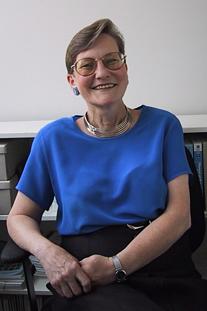

Diana Hacker

Diana Hacker personally class-tested her handbooks with nearly four thousand students over thirty-five years at Prince George's Community College in Maryland, where she was a member of the English faculty. Hacker handbooks, built on innovation and on a keen understanding of the challenges facing student writers, are the most widely adopted in America. Hacker handbooks, all published by Bedford/St. Martin's, include A Writer's Reference, Eleventh Edition (2025); A Pocket Style Manual, Tenth Edition (2025); The Bedford Handbook, Twelfth Edition (2023); Rules for Writers, Tenth Edition (2022); and Writer’s Help 2.0, Hacker Version.
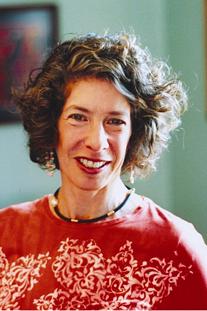

Nancy Sommers

Nancy Sommers, who has taught composition and directed composition programs for thirty years, now teaches in Harvard's Graduate School of Education. She led Harvard's Expository Writing Program for twenty years, directing the first-year writing program and establishing Harvard's WAC program. A two-time Braddock Award winner, Sommers is well known for her research and publications on student writing. Her articles “Revision Strategies of Student and Experienced Writers” and “Responding to Student Writing” are two of the most widely read and anthologized articles in the field of composition. Recently she has been exploring different audiences through publishing in popular media. Sommers is the lead author on Hacker handbooks, all published by Bedford/St. Martin’s, and editor of Tiny Teaching Stories on Macmillan Learning's Bits Blog.


Amy Braziller

Amy Braziller is Professor Emeritus at Red Rocks Community College. She received her BA from Empire State College and her MA in Literature from New York University. She has presented on teaching writing and new media at numerous national and regional conferences. Her research focuses on the intersections between classroom and personal writing. Amy, who is at work on a series of personal essays related to her punk rock days in New York City, blogs about food, film, music, LGBTQ issues, and social media distractions at amybraziller.com.


Elizabeth Kleinfeld

Elizabeth Kleinfeld is the Writing Center Director and Professor of English at Metropolitan State College of Denver. She received her BS from Bradley University and her MS in English and PhD in Composition and Rhetoric from Illinois State University. She has published on disability, writing centers, and student source use in various journals and collections, including Computers & Composition Online and Praxis. Her research interests include disability studies, feminist pedagogies, and teaching for social justice. She blogs about grief and disability at elizabethkleinfeld.com.


University of Maryland-College Park


Appalachian State University


Table of Contents

Headshot of Susan Miller-Cochran

Susan Miller-Cochran

Susan Miller-Cochran is the Executive Director of General Education at the University of Arizona, where she is also a Professor of English. Her research focuses on higher education administration and academic labor (especially in writing programs), instructional technology, curricular design, and multilingual writing. She formerly served as Director of the Writing Program at UA (2015-2019), Director of First-Year Writing at North Carolina State University (2007-2015), and a faculty member in English/ESL at Mesa Community College (AZ, 2000-2006). She has also served as a past president of the Council of Writing Program Administrators and a member of the Executive Committee of the Conference on College Composition and Communication. Her work has appeared in over 40 journal articles and book chapters, and she is a co-editor of Composition, Rhetoric, and Disciplinarity (Utah State, 2018); Rhetorically Rethinking Usability (Hampton, 2009); and Strategies for Teaching First-Year Composition (NCTE, 2002).


Headshot of Roy Stamper

Roy Stamper

Roy Stamper is a Senior Lecturer in English and Associate Director of the First-Year Writing Program in the Department of English at North Carolina State University, where he teaches courses in composition and rhetoric. He is also academic advisor to the department’s Language, Writing, and Rhetoric majors. He has been recognized as an Outstanding Lecturer as well as an Outstanding Faculty Advisor in the College of Humanities and Social Sciences and is a recipient of NC States New Advisor Award. Prior to his current appointment, he worked as a high school English teacher. He has presented papers at a number of local, regional, and national conferences, including the Conference of the Council of Writing Program Administrators and the Conference on College Composition and Communication.


Headshot of Stacey Cochran

Stacey Cochran

Stacey Cochran is an Assistant Professor researching innovative teaching practices centered on writing and well-being at the University of Arizona, with dual appointments in English and the office of Student Success and Retention Innovation. He has also served as the Coordinator of Student Success and Wellness in the College of Social and Behavioral Sciences. His bestselling novel Eddie & Sunny was adapted as a major motion picture in 2021 by Paradox Studios US and Iervolino Entertainment. He was a finalist for the 1998 Dell Magazines Award, a finalist for the 2004 St. Martins Press/PWA Best First Private Eye Novel Contest, and finalist for the 2011 James Hurst Prize for fiction.


Headshot of Andrea Lunsford

Andrea Lunsford

Andrea Lunsford, Louise Hewlett Nixon Professor of English emerita and former Director of the Program in Writing and Rhetoric at Stanford University, joined the Stanford faculty in 2000. Prior to this appointment, she was Distinguished Professor of English at The Ohio State University (1986-2000) and, before that, Associate Professor and Director of Writing at the University of British Columbia (1977-86) and Associate Professor of English at Hillsborough Community College. A frequent member of the faculty of the Bread Loaf School of English, Andrea earned her B.A. and M.A. degrees from the University of Florida and completed her Ph.D. in English at The Ohio State University (1977). She holds honorary degrees from Middlebury College and The University of Ôrebro.


Andrea’s scholarly interests include the contributions of women and people of color to rhetorical history, theory, and practice; collaboration and collaborative writing, comics/graphic narratives; translanguaging and style, and technologies of writing. She has written or coauthored/coedited many books, including Essays on Classical Rhetoric and Modern Discourse; Singular Texts/Plural Authors: Perspectives on Collaborative Writing; Reclaiming Rhetorica: Women in the History of Rhetoric, and The Norton Anthology of Rhetoric and Writing as well as numerous chapters and articles. For Bedford/St. Martin’s, she is the author of The St. Martins Handbook, The Everyday Writer, and EasyWriter; the co-author (with John Ruszkiewicz) of Everything’s an Argument and (with John Ruszkiewicz and Keith Walters) of Everything’s an Argument with Readings; and the co-author (with Lisa Ede) of Writing Together: Collaboration in Theory and Practice.


Andrea has given presentations and workshops on the changing nature and scope of writing and critical language awareness at scores of North American universities, served as Chair of the Conference on College Composition and Communication, as Chair of the Modern Language Association Division on Writing, and as a member of the MLA Executive Council. In her spare time, she serves on the Board of La Casa Roja’s Next Generation Leadership Network, as past Chair of the Kronos Quartet Performing Arts Association--and works diligently if not particularly well in her communal organic garden.


Headshot of John Ruszkiewicz

John Ruszkiewicz

John J. Ruszkiewicz is a professor emeritus at the University of Texas at Austin where he taught literature, rhetoric, and writing for forty years. A winner of the President’s Associates Teaching Excellence Award, he was instrumental in creating the Department of Rhetoric and Writing in 1993 and directed the unit from 2001-05. He has also served as president of the Conference of College Teachers of English (CCTE) of Texas, which gave him its Frances Hernández Teacher—Scholar Award in 2012. For Bedford/St. Martins, he is coauthor, with Andrea Lunsford, of Everything’s an Argument and the author of How to Write Anything. In retirement, he writes the mystery novels under the pen name J.J. Rusz; the most recent, The Mule Ears, published in 2023 on Amazon.


Headshot of Cheryl E. Ball

Cheryl E. Ball

Cheryl E. Ball

Cheryl E. Ball is a queer, cis, white woman residing in metro Detroit--the ancestral and contemporary lands of the Anishinaabe peoples, which she honors daily by caring for the land and all of its spirits. Dr. Ball (pronoun flexible) is director of the Digital Publishing Collaborative in the libraries at Wayne State University, where she collaborates with and mentors faculty, staff, and students on digital publishing projects including digital research websites, open educational resources, open-access publications, digital humanities project management, digital pedagogy, and other digitally based scholarly communications needs. Her favorite work time is spent training interns in publishing pedagogy. Dr. Ball also edits the longest running scholarly multimedia journal, Kairos: A Journal of Rhetoric, Technology, and Pedagogy, and is Editor-in-Chief for the Library Publishing Curriculum. Publications include a scholarly multimedia collection The New Work of Composing (co-edited with Debra Journet and Ryan Trauman, C&C Digital Press) and the print-based RAW: Reading and Writing New Media (co-edited with Jim Kalmbach, Hampton Press).Through these and other efforts, she strives to teach folks how to publish their multimodal work in inclusive, anti-racist, and accessible ways


Headshot of Jennifer Sheppard

Jennifer Sheppard

Jennifer Sheppard is a faculty member in the Rhetoric and Writing Studies Department at San Diego State University, where she serves as the Associate Director of Lower Division Writing. She regularly teaches courses in visual communication, digital and popular culture rhetorics, and professional communication. Her research and publication projects have focused on the intersection of theory and practice in digital writing, new media composing, professional communication, and pedagogy for face-to-face and online instruction. Her work has appeared in the Journal of Literacy and Technology, Hybrid Pedagogy, Computers and Composition, and several edited collections, including Designing Texts: Teaching Visual Communication and RAW: Reading and Writing New Media. She lives in San Diego, CA, with her partner, Kathryn, and their son, Eli.


Headshot of Kristin L. Arola

Kristin L. Arola

Kristin L. Arola is an Associate Professor in the Department of Writing, Rhetoric, and American Cultures at Michigan State University. Her work brings together composition theory, digital rhetoric, and American Indian rhetorics so as to understand digital composing practices within larger social and cultural contexts. Her most recent book, Composing (Media) = Composing (Embodiment) [with Anne Frances Wysocki, Utah State UP, 2012] is an edited collection that explores how the media we produce and consume embody us in a two-way process. She is also the co-editor of the third edition of CrossTalk in Comp Theory: A Reader [with Victor Villanueva, NCTE, 2011]. Her work has appeared in Computers and Composition, Harlot: A Revealing Look at the Arts of Persuasion, and the Journal of Literacy and Technology. She resides in Pullman, WA, with her amazing husband and charming dog.


Headshot of Stuart Greene

Stuart Greene

Stuart Greene received his Ph.D. in English from Carnegie Mellon in Rhetoric. He is associate professor of English with a joint appointment in Africana Studies at Notre Dame.His research has examined the intersections of race, poverty, and achievement in public schools. This work has led to the publication of his co-edited volume, Making Race Visible: Literacy Research for Racial Understanding (Teachers College Press, 2003), for which he won the National Council of Teachers of English Richard A. Meade Award in 2005. He has published a monographic, Race, Community, and Urban Schools: Partnering with African American Families (Teachers College Press, 2013), edited Literacy as a Civil Right (Peter Lang, 2008) and co-edited with Cathy Compton-Lilly, Bedtime Stories and Book Reports: Connecting Parent Involvement and Family Literacy (Teachers College Press, 2011). His current research focuses on literacy, youth empowerment and civic engagement in the context of university/community partnerships. This work appears in his edited collection Youth Voices, Public Spaces, and Civic Engagement. (Routledge Press, 2016), Language Arts, Urban Education, and The Urban Review.


Headshot of April Lidinsky

April Lidinsky

April Lidinsky (PhD, Literatures in English, Rutgers) is Professor of Womens and Gender Studies at Indiana University South Bend. She has published and delivered numerous conference papers on writing pedagogy, womens autobiography, and creative nonfiction, and has contributed to several textbooks on writing. She has served as acting director of the University Writing Program at Notre Dame and has won several awards for her teaching and research including the 2015 Indiana University South Bend Distinguished Teaching Award, the 2017 Indiana University South Bend Eldon F. Lundquist Award for excellence in teaching and scholarly achievement, and the All-Indiana University 2017 Frederic Bachman Lieber Memorial Award for Teaching Excellence.


Headshot of Elizabeth Wardle

Elizabeth Wardle

Elizabeth Wardle is the Roger and Joyce Howe Distinguished Professor of Written Communication and Director of the Roger and Joyce Howe Center for Writing Excellence at Miami University. She was Chair of the Department of Writing and Rhetoric at the University of Central Florida (UCF), and Director of Writing Programs at UCF and University of Dayton. These experiences fed her interest in how students learn and repurpose what they know in new settings. With Linda Adler-Kassner, she is co-editor of Naming  What  We Know: Threshold Concepts of Writing Studies (2015), winner of the WPA Award for Outstanding Contribution to the Discipline (2016), and of (Re)Considering What We Know: Learning Thresholds in Writing, Composition, Rhetoric, and Literacy; with Rita Malenczyk, Susan Miller-Cochran, and Kathleen Blake Yancey, she is co-editor of Composition, Rhetoric, and Disciplinarity (2018). Her current research focuses on how to enact grassroots change via writing across the curriculum programs, and her forthcoming co-edited collection with faculty from across disciplines is Changing Conceptions, Changing Practices: Innovating Teaching and Learning Across Disciplines (2022).


Headshot of Doug Downs

Doug Downs

Doug Downs is Associate Professor of  Rhetoric and Writing Studies and former Director of the Core Writing Program in the Department of English at Montana State University (Bozeman). His interests are in college-level writing, research, and reading pedagogy, especially as these intersect in first-year composition courses and in undergraduate research. He served as editor of Young Scholars in Writing, the national peer-reviewed journal of undergraduate research on writing and rhetoric, from 2015 to 2020. His current research projects involve methods of mentoring undergraduate research, inclusive writing pedagogies that help students grow as writers, and how we can teach rhetorics that foster constructive and cooperative public discourse.


Headshot of Lauren Ingraham

Lauren Ingraham

Lauren Ingraham is a Professor and Director of General Education at the University of Tennessee, Chattanooga. Specializing in writing program administration and rhetoric and composition studies, Dr. Ingraham teaches both undergraduates and graduate students. Her current research focuses on ways to improve high school students’ readiness for college writing. She has been a consultant for the National Council of Teachers of English, and her most recent publication appears in The Framework of Success in Postsecondary Writing: Scholarship, Theories, and Practice (edited by Nicholas Behm, Sherry Rankings Robertson, and Duane Roen, 2017).


Headshot of Jeanne Law Bohannon

Jeanne Law Bohannon

Jeanne Law Bohannon is an Associate Professor of English at Kennesaw State University. Her work with first-year writers focuses on creating digital and dialogic learning spaces, where students cultivate their writerly ethos through community engagement and public humanities. She is the Director of the #ATLStudentmovement Project and a Co-PI for the Learning Information Literacies Across the Curriculum (LILAC) initiative.


Headshot of Diana Hacker

Diana Hacker

Diana Hacker personally class-tested her handbooks with nearly four thousand students over thirty-five years at Prince George's Community College in Maryland, where she was a member of the English faculty. Hacker handbooks, built on innovation and on a keen understanding of the challenges facing student writers, are the most widely adopted in America. Hacker handbooks, all published by Bedford/St. Martin's, include A Writer's Reference, Eleventh Edition (2025); A Pocket Style Manual, Tenth Edition (2025); The Bedford Handbook, Twelfth Edition (2023); Rules for Writers, Tenth Edition (2022); and Writer’s Help 2.0, Hacker Version.


Headshot of Nancy Sommers

Nancy Sommers

Nancy Sommers, who has taught composition and directed composition programs for thirty years, now teaches in Harvard's Graduate School of Education. She led Harvard's Expository Writing Program for twenty years, directing the first-year writing program and establishing Harvard's WAC program. A two-time Braddock Award winner, Sommers is well known for her research and publications on student writing. Her articles “Revision Strategies of Student and Experienced Writers” and “Responding to Student Writing” are two of the most widely read and anthologized articles in the field of composition. Recently she has been exploring different audiences through publishing in popular media. Sommers is the lead author on Hacker handbooks, all published by Bedford/St. Martin’s, and editor of Tiny Teaching Stories on Macmillan Learning's Bits Blog.


Headshot of Amy Braziller

Amy Braziller

Amy Braziller is Professor Emeritus at Red Rocks Community College. She received her BA from Empire State College and her MA in Literature from New York University. She has presented on teaching writing and new media at numerous national and regional conferences. Her research focuses on the intersections between classroom and personal writing. Amy, who is at work on a series of personal essays related to her punk rock days in New York City, blogs about food, film, music, LGBTQ issues, and social media distractions at amybraziller.com.


Headshot of Elizabeth Kleinfeld

Elizabeth Kleinfeld

Elizabeth Kleinfeld is the Writing Center Director and Professor of English at Metropolitan State College of Denver. She received her BS from Bradley University and her MS in English and PhD in Composition and Rhetoric from Illinois State University. She has published on disability, writing centers, and student source use in various journals and collections, including Computers & Composition Online and Praxis. Her research interests include disability studies, feminist pedagogies, and teaching for social justice. She blogs about grief and disability at elizabethkleinfeld.com.


Headshot of University of Maryland-College Park

University of Maryland-College Park


Headshot of Appalachian State University

Appalachian State University


Related Titles

Find Your School

Select Your Discipline

Select Your Course

search icon
No schools matching your search criteria were found !
No active courses are available for this school.
No active courses are available for this discipline.
Can't find your course?

Find Your Course

Confirm Your Course

Enter the course ID provided by your instructor
search icon

We found the following course. Does this look correct?

We found the following course. To properly enroll in your course, please use the link provided in your school's course system (LMS Example: Canvas, Blackboard, D2L, Etc).

Your Achieve account needs to be linked with your school's account.

Find Your School

Select Your Course

No schools matching your search criteria were found.
(Optional)
Select Your Course
No Courses found for your selection.
  • macmillanlearning.com
  • // Privacy Notice
  • // Ads & Cookies
  • // Terms of Purchase/Rental
  • // Terms of Use
  • // Piracy
  • // Products
  • // Site Map
  • // Customer Support
Student store Footer Logo
  • macmillan learning facebook
  • macmillan learning twitter
  • macmillan learning youtube
  • macmillan learning linkedin
  • macmillan learning instagram
We are processing your request. Please wait...