Skip to Main Content
  • Instructor Site
  • Student Store
  • Canada StoreCanada
Student store Macmillan learning linkStudent Store Student store Macmillan learning linkStudent Store
    • I'M AN INSTRUCTOR

    • I'M A STUDENT
  • Student store Help link
  • search

    Find what you need to succeed.

    search icon
  • Shopping Cart
    0
    • Canada StoreCanada
  • Who We Are

    Who We Are

    back
    • Who We Are
  • Student Benefits

    Student Benefits

    back
    • Special Offers
    • Flexible Formats
    • College Quest Blog
  • Discipline

    Discipline

    back
    • Anatomy & Physiology Astronomy Biochemistry Biology Chemistry College Success Communication Economics Electrical Engineering English Environmental Science Geography Geology History Mathematics Music & Theater Nutrition and Health Philosophy & Religion Physics Psychology Sociology Statistics
  • Digital Products

    Digital Products

    back
    • Achieve
    • E-books
    • iClicker Student App (Student Response System)
  • Support

    Support

    back
    • Get Help
    • Support Community
    • Student Options Explained

Cover: Precalculus for the AP® Course, 1st Edition by Stephen Kokoska; Bruce Crauder; Benny Evans; Alan Noell

GET FREE SHIPPING!

Use Promo Code SHIPFREE at Step 4 of checkout.

*Free Shipping only applicable to US orders. Restrictions apply.

Precalculus for the AP® Course

First  Edition|©2027  Stephen Kokoska; Bruce Crauder; Benny Evans; Alan Noell

  • About
  • Contents
  • Authors

About

Digital Options

Contents

Table of Contents

Chapter 0: Prerequisites

    0.1 The Coordinate Plane: Lines and Circles

    0.2 Linear Inequalities

    0.3 Nonlinear Inequalities


Unit 1: Polynomial and Rational Functions

Chapter 1: Polynomial Functions

    1.1 Function Essentials

    1.2 Rates of Change

    1.3 Rates of Change: Linear and Quadratic Functions

    1.4 Rates of Change: Polynomial Functions

    1.5 Polynomial Functions: Characteristics Related to Zeros

    1.6 Polynomial Functions: End Behavior

Chapter 2: Rational Functions

    2.1 Rational Functions: End Behavior

    2.2 Rational Functions: Zeros

    2.3 Rational Functions: Vertical Asymptotes

    2.4 Rational Functions: Holes

    2.5 Equivalent Representations of Polynomials and Rational Expressions

Chapter 3: Transformations and Modeling

    3.1 Transformations of Functions

    3.2 Function Models: Selection, Assumptions, Limitations

    3.3 Function Models: Applications


Unit 2: Exponential and Logarithmic Functions

Chapter 4: Exponential Functions

    4.1 Rates of Change: Arithmetic and Geometric Sequences, Linear and Exponential Functions

    4.2 Exponential Functions: Characteristics and Properties

    4.3 Exponential Function Models

    4.4 Composition of Functions

Chapter 5: Logarithmic Functions

    5.1 Inverse Functions

    5.2 Logarithmic Functions: Characteristics and Properties

    5.3 Exponential and Logarithmic Equations and Inequalities

    5.4 Function Models: Logarithmic

    5.5 Semi-Log Plots


Unit 3: Trigonometric and Polar Functions

Chapter 6: Trigonometry Part 1

    6.1 Periodic Phenomena

    6.2 Sine, Cosine, and Tangent Functions

    6.3 Sine and Cosine Graphs

    6.4 The Sine and Cosine Functions: Transformations

    6.5 Sinusoidal Function Models

    6.6 The Tangent Function


Chapter 7: Trigonometry Part 2

    7.1 Inverse Trigonometric Functions

    7.2 Trigonometric Equations and Inequalities

    7.3 The Secant, Cosecant, and Cotangent Functions

    7.4 Trigonometric Identities and Simplifications

    7.5 Verifying Trigonometric Identities

Chapter 8: Polar Functions

    8.1 The Polar Coordinate System

    8.2 Polar Function Graphs

    8.3 Rates of Change in Polar Functions

Unit 4: Functions Involving Parameters, Vectors, and Matrices

Chapter 9: Parametric Equations and Functions Defined Implicitly

    9.1 Parametric Equations: Definitions and Graphs

    9.2 Parametric Equations: Modeling Motion

    9.3 Parametric Equations: Rates of Change

    9.4 Parametric Equations: Circles and Lines

    9.5 Functions Defined Implicitly

    9.6 Conic Sections

    9.7 Rewriting Equations in Parametric Form

Chapter 10: Vectors and Matrices

    10.1 Vectors

    10.2 Vector-Valued Functions

    10.3 Matrices

    10.4 The Determinant and the Inverse of a Matrix

    10.5 Linear Transformations

    10.6 Representation of Functions using Matrices

    10.7 Matrix Models

Appendix

    A.1 Law of Sines

    A.2 Law of Cosines
Authors

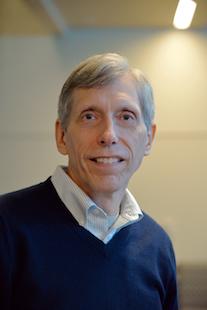
Stephen Kokoska

Steve Kokoska received his undergraduate degree from Boston College, and his M.S and Ph.D. from the University of New Hampshire. His initial research interests included the statistical analysis of cancer chemoprevention experiments. He has published a number of research papers in mathematics journals, including: Biometrics, Anticancer Research, and Computer Methods and Programs in Biomedicine. He has also presented results at national conferences, written several books, and been awarded grants from the National Science Foundation, the Center for Rural Pennsylvania, and the Ben Franklin Program.

Steve is a long-time consultant for the College Board and conducted workshops in Brazil, the Dominican Republic, and China. He was the AP Calculus Chief Reader for four years, and has been involved with calculus reform and the use of technology in the classroom. He has been teaching at Bloomsburg University for 25years and recently served as Director of the Honors Program.

Steve has been teaching introductory statistics classes throughout his academic career, and there is no doubt that this is his favorite course. This class (and text) provides students with basic, life-long, quantitative skills that they will use in almost any job and teaches them how to think and reason logically. Steve believes very strongly in data-driven decisions and conceptual understanding through problem solving.


Bruce Crauder

Bruce Crauder received his B.A. from Haverford College and his M.S. and Ph.D. from Columbia University. After post-doctoral positions at the Institute for Advanced Study, the University of Utah, and the University of Pennsylvania, Crauder came to Oklahoma State University, where he is now Professor of Mathematics and Associate Dean. Crauder’s research in algebraic geometry has resulted in 10 refereed articles in as many years in his specialty, three-dimensional birational geometry.


Benny Evans

Benny Evans received his Ph.D. in mathematics from the University of Michigan. He is currently Professor of Mathematics at Oklahoma State University, where he has served as undergraduate director, associate head, and department head. He has held visiting appointments at the Institute for Advanced Study, Rice University, and Texas A&M. His research interests are topology and mathematics education.


Alan Noell

Alan Noell has a B.A. degree in Mathematics from Texas A&M University, and M.A. and Ph.D. degrees in Mathematics from Princeton University. After a postdoctoral position at CalTech, in 1985 he joined the faculty at Oklahoma State University, where he is now Professor of Mathematics. His research interests are in the area of several complex variables. He has also enjoyed working in the area of curriculum development. His work has been supported by the National Science Foundation and other sources.


The Equation for AP® Precalculus Success

Table of Contents

Chapter 0: Prerequisites

    0.1 The Coordinate Plane: Lines and Circles

    0.2 Linear Inequalities

    0.3 Nonlinear Inequalities


Unit 1: Polynomial and Rational Functions

Chapter 1: Polynomial Functions

    1.1 Function Essentials

    1.2 Rates of Change

    1.3 Rates of Change: Linear and Quadratic Functions

    1.4 Rates of Change: Polynomial Functions

    1.5 Polynomial Functions: Characteristics Related to Zeros

    1.6 Polynomial Functions: End Behavior

Chapter 2: Rational Functions

    2.1 Rational Functions: End Behavior

    2.2 Rational Functions: Zeros

    2.3 Rational Functions: Vertical Asymptotes

    2.4 Rational Functions: Holes

    2.5 Equivalent Representations of Polynomials and Rational Expressions

Chapter 3: Transformations and Modeling

    3.1 Transformations of Functions

    3.2 Function Models: Selection, Assumptions, Limitations

    3.3 Function Models: Applications


Unit 2: Exponential and Logarithmic Functions

Chapter 4: Exponential Functions

    4.1 Rates of Change: Arithmetic and Geometric Sequences, Linear and Exponential Functions

    4.2 Exponential Functions: Characteristics and Properties

    4.3 Exponential Function Models

    4.4 Composition of Functions

Chapter 5: Logarithmic Functions

    5.1 Inverse Functions

    5.2 Logarithmic Functions: Characteristics and Properties

    5.3 Exponential and Logarithmic Equations and Inequalities

    5.4 Function Models: Logarithmic

    5.5 Semi-Log Plots


Unit 3: Trigonometric and Polar Functions

Chapter 6: Trigonometry Part 1

    6.1 Periodic Phenomena

    6.2 Sine, Cosine, and Tangent Functions

    6.3 Sine and Cosine Graphs

    6.4 The Sine and Cosine Functions: Transformations

    6.5 Sinusoidal Function Models

    6.6 The Tangent Function


Chapter 7: Trigonometry Part 2

    7.1 Inverse Trigonometric Functions

    7.2 Trigonometric Equations and Inequalities

    7.3 The Secant, Cosecant, and Cotangent Functions

    7.4 Trigonometric Identities and Simplifications

    7.5 Verifying Trigonometric Identities

Chapter 8: Polar Functions

    8.1 The Polar Coordinate System

    8.2 Polar Function Graphs

    8.3 Rates of Change in Polar Functions

Unit 4: Functions Involving Parameters, Vectors, and Matrices

Chapter 9: Parametric Equations and Functions Defined Implicitly

    9.1 Parametric Equations: Definitions and Graphs

    9.2 Parametric Equations: Modeling Motion

    9.3 Parametric Equations: Rates of Change

    9.4 Parametric Equations: Circles and Lines

    9.5 Functions Defined Implicitly

    9.6 Conic Sections

    9.7 Rewriting Equations in Parametric Form

Chapter 10: Vectors and Matrices

    10.1 Vectors

    10.2 Vector-Valued Functions

    10.3 Matrices

    10.4 The Determinant and the Inverse of a Matrix

    10.5 Linear Transformations

    10.6 Representation of Functions using Matrices

    10.7 Matrix Models

Appendix

    A.1 Law of Sines

    A.2 Law of Cosines

Headshot of Stephen Kokoska

Stephen Kokoska

Steve Kokoska received his undergraduate degree from Boston College, and his M.S and Ph.D. from the University of New Hampshire. His initial research interests included the statistical analysis of cancer chemoprevention experiments. He has published a number of research papers in mathematics journals, including: Biometrics, Anticancer Research, and Computer Methods and Programs in Biomedicine. He has also presented results at national conferences, written several books, and been awarded grants from the National Science Foundation, the Center for Rural Pennsylvania, and the Ben Franklin Program.

Steve is a long-time consultant for the College Board and conducted workshops in Brazil, the Dominican Republic, and China. He was the AP Calculus Chief Reader for four years, and has been involved with calculus reform and the use of technology in the classroom. He has been teaching at Bloomsburg University for 25years and recently served as Director of the Honors Program.

Steve has been teaching introductory statistics classes throughout his academic career, and there is no doubt that this is his favorite course. This class (and text) provides students with basic, life-long, quantitative skills that they will use in almost any job and teaches them how to think and reason logically. Steve believes very strongly in data-driven decisions and conceptual understanding through problem solving.


Headshot of Bruce Crauder

Bruce Crauder

Bruce Crauder received his B.A. from Haverford College and his M.S. and Ph.D. from Columbia University. After post-doctoral positions at the Institute for Advanced Study, the University of Utah, and the University of Pennsylvania, Crauder came to Oklahoma State University, where he is now Professor of Mathematics and Associate Dean. Crauder’s research in algebraic geometry has resulted in 10 refereed articles in as many years in his specialty, three-dimensional birational geometry.


Headshot of Benny Evans

Benny Evans

Benny Evans received his Ph.D. in mathematics from the University of Michigan. He is currently Professor of Mathematics at Oklahoma State University, where he has served as undergraduate director, associate head, and department head. He has held visiting appointments at the Institute for Advanced Study, Rice University, and Texas A&M. His research interests are topology and mathematics education.


Headshot of Alan Noell

Alan Noell

Alan Noell has a B.A. degree in Mathematics from Texas A&M University, and M.A. and Ph.D. degrees in Mathematics from Princeton University. After a postdoctoral position at CalTech, in 1985 he joined the faculty at Oklahoma State University, where he is now Professor of Mathematics. His research interests are in the area of several complex variables. He has also enjoyed working in the area of curriculum development. His work has been supported by the National Science Foundation and other sources.


Related Titles

Find Your School

Select Your Discipline

Select Your Course

search icon
No schools matching your search criteria were found !
No active courses are available for this school.
No active courses are available for this discipline.
Can't find your course?

Find Your Course

Confirm Your Course

Enter the course ID provided by your instructor
search icon

We found the following course. Does this look correct?

We found the following course. To properly enroll in your course, please use the link provided in your school's course system (LMS Example: Canvas, Blackboard, D2L, Etc).

Your Achieve account needs to be linked with your school's account.

Find Your School

Select Your Course

No schools matching your search criteria were found.
(Optional)
Select Your Course
No Courses found for your selection.
  • macmillanlearning.com
  • // Privacy Notice
  • // Ads & Cookies
  • // Terms of Purchase/Rental
  • // Terms of Use
  • // Piracy
  • // Products
  • // Site Map
  • // Customer Support
Student store Footer Logo
  • macmillan learning facebook
  • macmillan learning twitter
  • macmillan learning youtube
  • macmillan learning linkedin
  • macmillan learning instagram
We are processing your request. Please wait...